
Nigeria’s Energy Situation
Nigeria is an oil-producing country with large quantities of both natural gas and coal reserves, and supplies energy resources to Europe, the USA and Asia. The oil and gas export industry is the largest economic sector in Nigeria and, according to Central Bank of Nigeria reporting, accounts for more than 83% of consolidated budget earnings. Any effort to abandon the intensive exploitation of this resource in the current situation would pose an immense challenge, both economically and politically.
At the same time, grid-connected hydro and thermal power plants do not meet domestic energy needs. There is an acute shortage of energy supply for industry and urban centres, resulting in regular interruptions of power supply, and the majority of the population, who live in rural areas, are without electricity supply. Many consumers, driven by the country’s economic situation and rapidly growing internal prices of energy resources, use their own sources — including cutting down trees — to generate power. As a result, organic fuels are utilised inefficiently, causing damage to the environment.
Despite the seemingly abundant reserves of organic fuels in Nigeria — and noting that oil and gas reserves are exhaustible — there is therefore a need to enhance the utilisation efficiency of energy resources and to diversify the primary energy mix, so that the consumption of oil, gas, coal and forest wood is reduced.
The Solar Resource
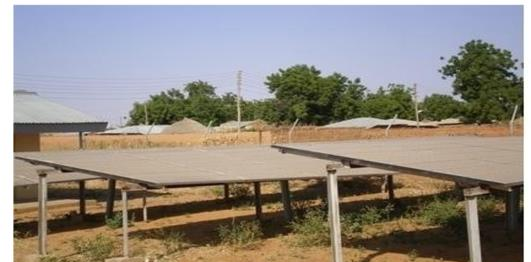
Nigeria is well blessed with daily solar radiation averaging between about 4 kWh/m²/day in the southern part of the country and 7 kWh/m²/day in the northern part. Nigeria lies within a high sunshine belt, and solar intensity varies with location, season, day of the month and time of day — ranging from roughly 3.5 kWh/m²/day in the coastal latitudes to about 7.0 kWh/m²/day in the far North.
This makes the far North, where the Centre is situated, among the most favourable locations in the country for solar thermal and solar photovoltaic application.
The Case for Renewable Energy
Environmentally clean, non-conventional renewable sources of energy — solar, wind, biomass, geothermal, tidal and small hydro — are of vital importance as future energy sources. If Nigeria is to benefit optimally from the application of Renewable Energy Technology (RET), it must have:
- Credible funding for research;
- Collaborative research between industry and academia; and
- Commercialisation of research and development output.
Nigeria’s energy research centres and other research groups in institutions of higher learning have to date achieved relatively little in the area of innovation and local manufacturing of renewable energy technology. This has been attributed to the lack of credible research and development infrastructure for adopting and modifying imported technology and for driving applicable business models.
The Centre’s Response
SERC’s work is directed at arresting the ecological problems of desert encroachment, soil erosion and desertification, through design strategies, the establishment of credible research and development infrastructure, capacity building and public awareness aimed at removing the barriers to renewable energy penetration in Nigeria.
Supervision and coordination
SERC operates under the Energy Commission of Nigeria, which is responsible for the strategic coordination of national energy planning and policy implementation. The Centre’s budget is considered and recommended by the Commission as part of the national energy research programme.